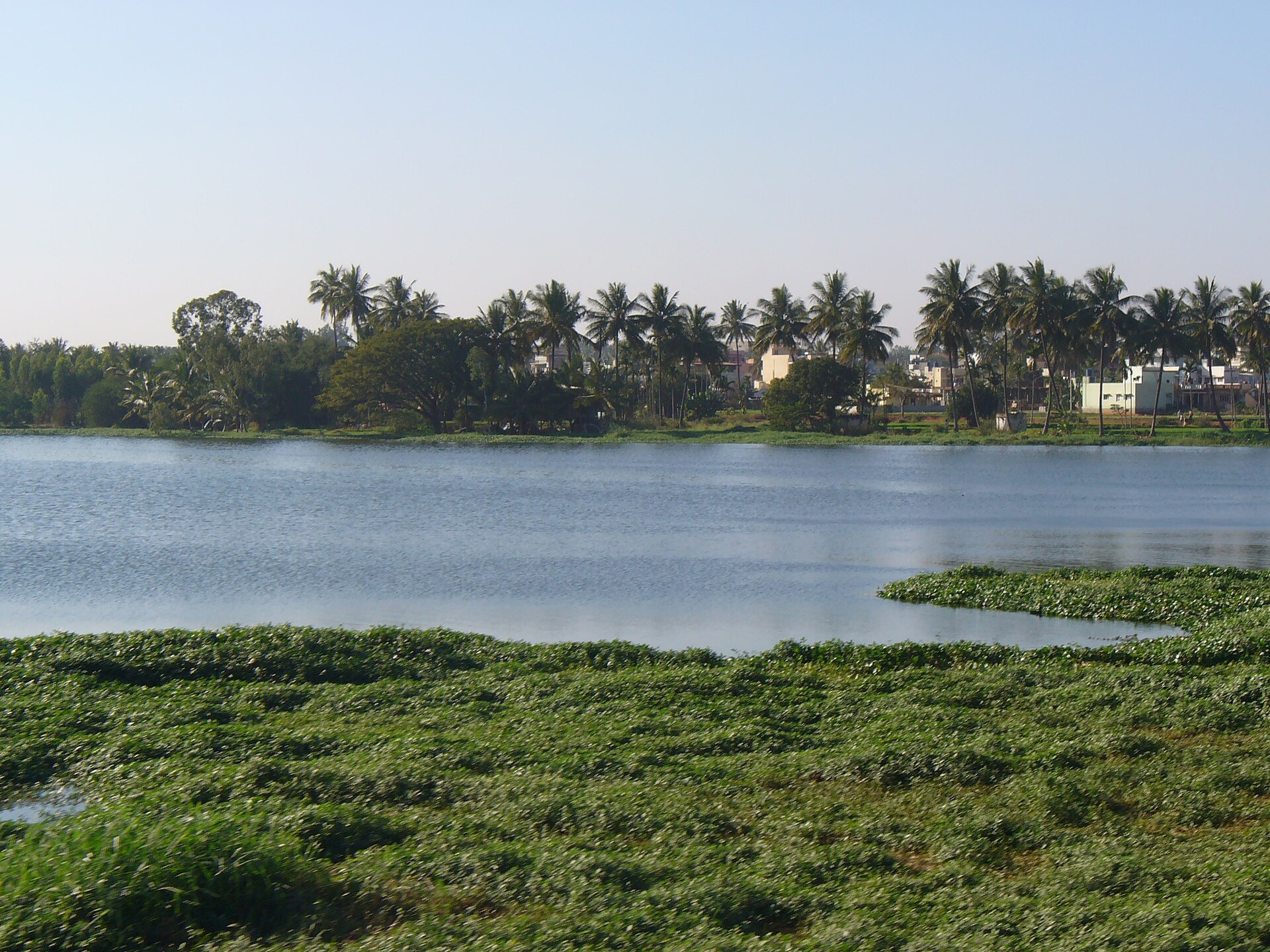
Water supply in Whitefield and Varthur is in transition. Cauvery Stage V, commissioned in October 2024, was built to bring 775 million litres a day to the 110 villages on Bengaluru’s edge, which include most of Varthur, Gunjur and the Whitefield periphery. By April 2025, 104 of those 110 villages were receiving some Cauvery water and about 89,000 connections had been made. But last-mile pipes, road works and pending reservoirs mean many apartments here still run on a mix of Cauvery, borewells and tankers. For a buyer, the water source of a specific building matters more than the area average, and it can change your monthly water cost several times over.
This guide sets out where the supply comes from, what it costs, what happened in the 2024 crisis, what is planned to 2030, and the exact questions to ask before you book a home in East Bangalore.
Where Whitefield–Varthur water comes from
Homes in this belt draw on four sources. Most apartment complexes use at least two of them, and the mix changes with the season.
| Source | Who supplies it | Reliability | Typical cost to an apartment |
|---|---|---|---|
| Cauvery (piped) | BWSSB, via Stage V for the 110 villages | High once connected; affected by local pipe works | ₹25–55 per 1,000 litres (2025 tariff) |
| Borewells | The building’s own wells | Falls sharply in summer and dry years | Power and maintenance; deep wells are costly to drill |
| Private tankers | Private suppliers, mostly from outlying villages | Available, but price swings with scarcity | Roughly ₹100–240 per 1,000 litres (2024–2025 rates) |
| Treated water (STP) | The building’s own sewage treatment plant | Steady; non-drinking use only | Operating cost of the plant |
The cost gap is the single most important fact here. Piped Cauvery water costs a fraction of tanker water, so a complex with a working Cauvery connection pays far less in maintenance than one living on tankers.
Cauvery Stage V: what it promised and what has arrived
The 110 villages were absorbed into the city in 2006–07, but for nearly two decades most had no piped Cauvery supply. Stage V was designed to fix that. The ₹5,550-crore project was commissioned in October 2024 to deliver 775 million litres a day (MLD), lifting the city’s total Cauvery draw to about 2,225 MLD, according to The Hans India and Deccan Herald.
| Milestone | Figure | Source |
|---|---|---|
| Commissioned | 16 October 2024 | Citizen Matters |
| Design capacity | 775 MLD for the 110 villages | Citizen Matters, Hans India |
| Project cost | ₹5,550 crore | Hans India |
| Connections sanctioned in 2024 | 40,800 (28,425 households, 1,365 apartment complexes, 10,815 commercial) | Deccan Herald |
| Connection fees paid by residents in 2024 | ₹172.72 crore | Deccan Herald |
| Villages receiving water by April 2025 | 104 of 110 | Citizen Matters (BWSSB chairman) |
| Connections completed by April 2025 | About 89,000 | Citizen Matters (BWSSB chairman) |
| How long Stage V capacity lasts | Until about 2028, per BWSSB | Citizen Matters |
Two local details matter for Varthur and Whitefield buyers. First, the villages still waiting for water were held up by land disputes that delayed reservoir work, including at the Kadugodi ground-level reservoir in Whitefield, as Deccan Herald reported. Second, Mahadevapura villages such as Hagadur, Channasandra, Panathur and Gunjur waited until at least January 2025 for supply because local works ran slowly, according to Citizen Matters.
More recently, the widening of SH-35 between Varthur New Bridge and the Varthur police station, from 60 to 100 feet, together with elevated-road construction, disrupted water lines serving Sorahunase, Varthur, Gunjur, Balagere and parts of Panathur, The Hans India reported. The road work is short-term pain for long-term gain; see our SH-35 widening update.
The demand gap: why Cauvery alone is not enough
Even with Stage V, Bengaluru uses more water than the river supplies. Data compiled by WELL Labs puts the city’s freshwater demand at about 2,632 MLD, against roughly 1,460 MLD drawn from the Cauvery before Stage V. In 2023 nearly half of the city’s needs, about 1,372 MLD, were met by pumping groundwater, while natural recharge was only about 148 MLD, Citizen Matters reported.
| Measure | Million litres a day |
|---|---|
| Estimated freshwater demand (WELL Labs) | About 2,632 |
| Cauvery supply before Stage V | About 1,450–1,460 |
| Cauvery supply after Stage V (design) | About 2,225 |
| Groundwater pumped (2023) | About 1,372 |
| Natural groundwater recharge | About 148 |
The last two rows explain the borewell problem. When a city pumps about nine times more groundwater than rain puts back, wells go deeper and then go dry. The Central Ground Water Board found that Bengaluru’s urban and rural districts were extracting 100% of their available groundwater in 2024, and BWSSB singled out Mahadevapura and Whitefield as areas where levels were falling fastest, The Hans India reported.
What the 2024 crisis taught East Bangalore
A weak 2023 monsoon turned a chronic problem into a crisis in early 2024, and the areas beyond the Outer Ring Road were hit hardest. Among BWSSB’s roughly 10,995 government borewells, levels fell in about 3,700 and some 1,214 dried up completely, according to figures South First reported from the board. Whitefield activists blamed unchecked commercial borewell drilling for draining the shared aquifer.
Tanker prices followed. A survey run with civic platform opencity.in and Citizen Matters found a 12,000-litre tanker that once cost under ₹1,500 was selling for as much as ₹2,850, Deccan Herald reported. The district administration capped prices, but residents in Varthur and Whitefield told The Hindu that suppliers ignored the cap, and some insisted on six-month contracts with apartment communities.
The lesson for buyers: a building that depends on borewells and tankers is exposed to exactly this kind of shock. A building with a working Cauvery connection, a functioning STP and serious rainwater recharge is not immune, but it is far better protected.
What water costs in 2026: Cauvery against tankers
In April 2025 BWSSB raised tariffs for the first time in 11 years and committed to a 3% rise every April. Apartments moved from a flat bulk rate of ₹22 per 1,000 litres to slabs: ₹25 up to 2 lakh litres a month, ₹28 for 2–5 lakh litres and ₹32 for 5–10 lakh litres, Citizen Matters reported. After objections from apartment groups, the board revised the structure so that each family gets 200 litres a day at ₹32 per 1,000 litres, with use beyond that billed at ₹55, Deccan Herald reported.
Tankers are a different order of cost. In February 2025 BWSSB set fixed prices of ₹750 to ₹1,200 for 6,000- to 12,000-litre loads within 5 to 10 km, ETV Bharat reported, while suppliers quoted about ₹1,400 for a 12,000-litre load that summer, according to Deccan Herald.
| Source and price point | Cost per 1,000 litres | Against Cauvery at ₹32 |
|---|---|---|
| Cauvery, apartment base slab (2025) | ₹32 | 1× |
| Cauvery, use above 200 litres a family a day | ₹55 | 1.7× |
| Tanker at BWSSB’s fixed price (12,000 litres at ₹1,200) | ₹100 | 3.1× |
| Tanker at 2025 market rate (12,000 litres at ₹1,400) | ₹117 | 3.6× |
| Tanker at 2024 crisis peak (12,000 litres at ₹2,850) | ₹238 | 7.4× |
What that means for one household
Take a family of four using 150 litres per person a day, about 18,000 litres a month. These are our illustrative calculations from the rates above, before the society’s own pumping and staff costs.
| If all of it came from… | Monthly cost | Yearly cost |
|---|---|---|
| Cauvery (6,000 litres at ₹32, 12,000 at ₹55) | About ₹850 | About ₹10,200 |
| Tankers at the 2025 market rate | About ₹2,100 | About ₹25,200 |
| Tankers at the 2024 crisis peak | About ₹4,280 | About ₹51,300 |
Real bills sit between these lines because most complexes blend sources. The point is the spread: over a decade, the difference between a Cauvery-connected building and a tanker-dependent one can exceed ₹1.5 lakh per household in water alone. It shows up in your maintenance charge; see our maintenance cost guide.
What is planned: Stage VI and treated water
BWSSB has prepared a detailed project report for Cauvery Stage VI, which would add about 500 MLD. Citizen Matters put the cost at ₹6,939 crore with a 2028 target, while the state’s announcement was reported at about ₹7,200 crore. Board sources told Deccan Herald that Stage VI could extend supply to Hoskote, Anekal, Nelamangala and Devanahalli. Large water projects in Bengaluru have historically run late, so treat 2028 as a target, not a date.
The faster lever is treated water. Bengaluru has one of the largest networks of decentralised sewage treatment plants in the world. Apartments with more than 120 units, or generating more than 80 kilolitres of sewage a day, must treat and reuse it on site under a zero-liquid-discharge norm, Citizen Matters explains. Yet research cited by Deccan Herald found about half of treated water goes unused. A complex with dual plumbing, so treated water flushes toilets and waters gardens, cuts its freshwater need sharply.
The state has also made Cauvery connections mandatory for apartment complexes in served areas, ETV Bharat reported, which pushes new projects toward the cheaper, more reliable source.
The water checklist: 10 questions to ask before you book
Ask these of any developer or society in Whitefield, Varthur or anywhere in the 110 villages, and ask for the answers in writing.
- Is there a BWSSB Cauvery connection, or an application? Ask for the sanction letter or the application receipt and the fee paid.
- What share of water comes from each source today? For a completed project, ask the society for the last 12 months of BWSSB bills and tanker receipts.
- How deep are the borewells, and what is their yield in May? Summer yield is the honest number.
- Is there an STP, and what is its capacity? Compare it with the number of homes; ask when it was last serviced.
- Is there dual plumbing? Without separate pipes, treated water cannot be used for flushing.
- Is greywater recycled? Greywater from baths and basins is the easiest to reuse.
- How much rainwater is harvested, and is it used for recharge? Ask for the number and depth of recharge wells, not just “provision for rainwater harvesting”.
- Are flats individually metered? Metering lowers use and makes billing fair.
- What water charge is built into maintenance? A fixed fee hides tanker costs until the summer bill arrives.
- What did the building do in March–April 2024? For older complexes, residents’ answers tell you more than any brochure.
Water at Prestige Rosewood
Prestige Rosewood sits on Varthur Main Road, inside the 110-village belt that Stage V was built to serve. The project’s published specification lists 100% greywater recycling with zero water discharge, rainwater harvesting and sewage treatment on site; see the specifications page. Those features address the demand side. The supply side, meaning the BWSSB connection for Phase 3, is one of the questions above that every buyer should put to the developer before signing the agreement, alongside the RERA documents.
Water supply in Whitefield and Varthur: questions answered
Does Varthur get Cauvery water?
Varthur is one of the 110 villages covered by Cauvery Stage V. Supply began reaching these villages after October 2024, but connection depends on the local pipe network, and the SH-35 widening has disrupted lines in Varthur, Gunjur and nearby villages. Check the specific building’s connection status.
Does Whitefield have a water shortage?
Whitefield’s groundwater is heavily over-pumped, and in the 2024 crisis many borewells failed and tanker prices nearly doubled. Supply has improved since Cauvery Stage V, but buildings that rely on borewells and tankers remain exposed in dry years.
How much does a water tanker cost in Whitefield?
BWSSB set prices of ₹750 to ₹1,200 for 6,000- to 12,000-litre loads in February 2025, while market rates for a 12,000-litre load were around ₹1,400 that summer. In the 2024 crisis, loads sold for up to ₹2,850.
What is the BWSSB water rate for apartments?
After the 2025 revision, each family in an apartment gets 200 litres a day at ₹32 per 1,000 litres, with use above that at ₹55 per 1,000 litres. Tariffs rise 3% every April.
Will Cauvery Stage VI solve the problem?
Stage VI would add about 500 MLD and is targeted for around 2028, but large water projects in Bengaluru often run late. Treated-water reuse and rainwater recharge will matter as much as new supply.
What should I check about water before buying a flat in Bengaluru?
The BWSSB connection status, the share of water from each source, summer borewell yield, STP capacity, dual plumbing, rainwater recharge, metering and the water charge in maintenance. Ask for documents, not assurances.
Figures are from the sources linked in the text, as reported between 2024 and 2026; household cost tables are our illustrative calculations. Conditions change with the monsoon and with BWSSB works, so verify a building’s current position before buying. This is market information, not technical or legal advice.
Related: Varthur Lake guide · SH-35 widening update · maintenance cost · cost of buying a flat in Bangalore · Prestige Rosewood
Sources
- Citizen Matters: Promise of Cauvery Stage V
- Deccan Herald: Over 40,800 water connections sanctioned under Cauvery Stage V
- The Hans India: Legal hurdles delay Cauvery Stage V project
- The Hans India: Bengaluru’s groundwater extraction hits 100%
- South First: Bengaluru’s worsening water crisis
- Deccan Herald: Tanker prices surge up to ₹2,850
- The Hindu: Despite price cap, water costs over ₹2,000 per tanker
- Citizen Matters: The Cauvery water tariff hike
- Deccan Herald: BWSSB cuts apartment water rates
- ETV Bharat: Restrictions and fixed tanker pricing
- Citizen Matters: Bengaluru’s apartment STPs
- Deccan Herald: What next for BWSSB after Stage V
Photo: Varthur Lake.jpg by Gaurav Vaidya, CC BY 2.0, via Wikimedia Commons
Interested in Prestige Rosewood Phase 3?
Ultra-luxury 2, 3 & 4 BHK residences directly opposite Varthur Lake. Pre-launch from ₹1.75 Cr. Possession December 2030.
Request Price & Floor Plans →