Bengaluru was the world’s second most congested city in 2025 on the TomTom Traffic Index: a 10 km trip took 36 minutes 9 seconds on average, rush-hour traffic moved at 13.9 km/h, and a regular commuter lost 168 hours, about seven full days, in rush-hour traffic. For Whitefield and Varthur, the answer is distance more than speed. A home 4 to 6 km from the office keeps a rush-hour commute to roughly 15 to 30 minutes; one 15 km away across the Outer Ring Road can take an hour or more. The Blue Line along the ORR is the single project most likely to change that equation for Varthur.
This report sets out the city-wide numbers, realistic peak commute times from Varthur, the junctions that cause the worst delays in East Bangalore, the projects meant to fix them, and how to judge a home’s commute before you buy.
Bengaluru traffic in numbers, 2025
| Measure (TomTom Traffic Index, 2025) | Bengaluru | Change from 2024 |
|---|---|---|
| Average time for 10 km | 36 min 9 s | 2 min 4 s slower |
| Average congestion level | 74.4% | Up 1.7 points |
| Average rush-hour speed | 13.9 km/h (morning 14.6, evening 13.2) | 1 km/h slower |
| Time lost in rush hour over the year | 168 hours | 12 h 46 min more |
| Worst day of the year | Saturday 17 May, 101% congestion; 183% at 6 pm | |
| Fastest time of day | Around 2 am, about 19–20 minutes for 10 km |
Source: TomTom Traffic Index, Bengaluru. The index ranked Bengaluru the second most congested city in the world in 2025.
Bengaluru Traffic Police read the same year more kindly. Their ASTraM data put a 10 km peak trip at 34.5 minutes and the peak speed at about 18.2 km/h, and found evening-peak variability fell from 17% in 2024 to 11% in 2025, News Karnataka reported. The two measure differently, but both agree on the core fact: crossing the city in the peak is slow, and short trips are the only reliable ones.
Realistic peak commute times from Varthur
The site’s location page gives typical drive times from Varthur Main Road. To show the rush-hour picture, we have also applied TomTom’s 2025 average rush-hour speed of 13.9 km/h to each road distance. Treat the second column as the realistic upper estimate for a weekday peak.
| Destination | Distance | Typical drive | Peak estimate at 13.9 km/h |
|---|---|---|---|
| ITPL (Whitefield) | 4 km | 12 min | About 17 min |
| Hopefarm Channasandra metro | 4 km | 11 min | About 17 min |
| Whitefield (Kadugodi) metro | 4.5 km | 12 min | About 19 min |
| ORR at Marathahalli / RMZ Ecospace | 6 km | 18 min | About 26 min |
| Whitefield railway station | 6 km | 12 min | About 26 min |
| Embassy Tech Village (ORR) | 9 km | 25 min | About 39 min |
| Kempegowda International Airport | 45 km | 75 min via Hoskote and NH-44 | Highway route; allow 75–90 min |
Peak estimates are our calculations; real times vary by route, day and weather. The pattern is what matters: every job hub in the Whitefield–ORR belt is within about 40 minutes of Varthur even at the city’s average peak speed.
Where the delays are in East Bangalore
Bengaluru Traffic Police now track queue lengths at junctions every 15 minutes using AI cameras and GPS data. Their list of the worst hotspots includes two in the Whitefield belt, Hopefarm and Kundalahalli Gate, alongside Silk Board and others, Deccan Herald reported. On the Outer Ring Road between Silk Board and KR Puram, the choke points are Silk Board, Agara, Iblur, Bellandur, Kadubeesanahalli, Marathahalli, Doddanekundi and KR Puram junctions, Trade Brains reported in August 2026.
| Hotspot | Why it jams | Who it affects from Varthur |
|---|---|---|
| Hopefarm junction | Meeting point of Whitefield Main Road, ITPL traffic and the metro station | Metro users and ITPL commuters |
| Kundalahalli Gate | ITPL Main Road feeding Brookefield and the EPIP Zone | EPIP and Brookefield office commuters |
| Marathahalli junction | ORR crossing Old Airport Road and Varthur Road | ORR and city-bound commuters |
| Varthur Kodi | SH-35 narrowing and widening works | Everyone using Varthur Main Road |
| Silk Board | ORR meeting Hosur Road; one of the city’s worst | Commuters to Electronic City and HSR |
The projects meant to fix it
| Project | What it does for East Bangalore | Status |
|---|---|---|
| Blue Line metro, Silk Board to KR Puram | Puts the whole ORR tech corridor on rail | 72% complete in August 2026; phased opening from about December 2026 |
| SH-35 Varthur–Gunjur widening and Varthur Kodi flyover | Widens Varthur Main Road from 60 to 100 feet | Due in 2027 |
| ORR Silk Board–KR Puram upgrade | Resurfacing, service roads and drains on a 17.1 km stretch, about ₹378 crore | About a year of works, with lane closures |
| Bengaluru Business Corridor | A 74 km ring road outside the ORR to divert through traffic | Land awards began November 2025; long-term |
| KR Puram–Nayandahalli tunnel road (proposed) | A 28 km east–west tunnel under the city | Detailed reports invited in 2025; not yet sanctioned |
Sources: Business Today, Trade Brains, Deccan Herald (Business Corridor), Deccan Herald (tunnel road); SH-35 details in our widening update. Full metro detail is in our metro and Business Corridor guide.
The near-term reality is that 2026 and 2027 bring more disruption, not less: Blue Line finishing works, the ORR upgrade and the SH-35 widening all overlap. The payoff comes as they finish, with the Blue Line the biggest single change for anyone who works on the ORR.
The commute calculator: what distance costs you
Using TomTom’s 2025 rush-hour speed of 13.9 km/h, a round trip on 230 working days a year costs:
| One-way distance to work | Peak time, one way | Hours a year in traffic (round trip) |
|---|---|---|
| 4 km | About 17 min | About 132 hours |
| 6 km | About 26 min | About 199 hours |
| 10 km | About 43 min | About 331 hours |
| 15 km | About 65 min | About 496 hours |
| 20 km | About 86 min | About 662 hours |
Our calculations. The jump from 6 km to 15 km adds roughly 300 hours a year, more than seven 40-hour work weeks. For a hybrid worker in the office three days a week, multiply by about 0.6. This is why homes within a short drive of the Whitefield and ORR job clusters hold their value and rent.
How to test a commute before you buy
- Drive it at the real time. Do the trip at 8:30 am and 6:30 pm on a Tuesday or Wednesday, not on a weekend visit.
- Check the route, not the distance. A 6 km trip through Marathahalli junction can take longer than an 8 km trip that avoids it.
- Count the metro option. Time the drive or auto to the nearest station plus the train; for many Whitefield commutes, it already beats driving.
- Look at what is under construction. Roads being widened are slow now and fast later; factor in when the work ends.
- Think about the household. Two working adults and a school run turn one commute into three. Our schools guide lists distances from Varthur.
What it means for a Prestige Rosewood buyer
Prestige Rosewood sits on Varthur Main Road, 4 km from ITPL and within about 6 to 9 km of the ORR office parks, which keeps the main Whitefield and ORR commutes inside about 40 minutes even at Bengaluru’s 2025 peak speed. Two metro stations, Hopefarm and Whitefield, are within 4.5 km now, and the Blue Line’s ORR stations near Marathahalli are about 6 km away once Phase 2A opens. Possession is due in December 2030, after the SH-35 widening and the Blue Line are scheduled to finish, so the disruption of 2026–27 should be behind new residents.
Whitefield commute and traffic: questions answered
How bad is Bengaluru traffic in 2025?
TomTom ranked Bengaluru the world’s second most congested city in 2025: 36 minutes 9 seconds for 10 km on average, 13.9 km/h in rush hour, and 168 hours a year lost in rush-hour traffic.
How long does it take to reach ITPL from Varthur?
About 4 km: around 12 minutes in normal traffic, and about 17 minutes at the city’s average rush-hour speed.
Which junctions are worst in Whitefield?
Bengaluru Traffic Police name Hopefarm and Kundalahalli Gate among the city’s worst hotspots; on the ORR, Marathahalli, Doddanekundi and KR Puram are the main choke points nearby.
Will the Blue Line reduce Whitefield traffic?
It will give ORR commuters a rail option between Silk Board and KR Puram, which should take some cars off the corridor. The line was 72% complete in August 2026, with phased opening from about December 2026.
What is the best time to drive in Bengaluru?
Late night is fastest, with a 10 km trip taking about 19 to 20 minutes around 2 am, per TomTom. The evening peak is the slowest part of the day.
Is it better to live near work in Bangalore?
Usually. At 2025 rush-hour speeds, every extra 5 km of daily commute costs roughly 165 hours a year for a full-time office worker, which is why homes near job clusters hold their value and rent.
Traffic figures are from TomTom and Bengaluru Traffic Police as reported; peak estimates and the calculator are our calculations. Actual times vary by route, day and weather. This is general information.
Related: metro and PRR impact · ITPL connectivity · SH-35 widening · Whitefield office spaces · Prestige Rosewood
Sources
- TomTom Traffic Index: Bengaluru
- News Karnataka: Traffic police data vs TomTom
- Deccan Herald: Bengaluru’s most congested hotspots
- Trade Brains: ORR Silk Board–KR Puram upgrade and choke points
- Business Today: Airport metro crosses 72% mark
- Deccan Herald: Business Corridor land awards
- Deccan Herald: KR Puram–Nayandahalli tunnel proposed
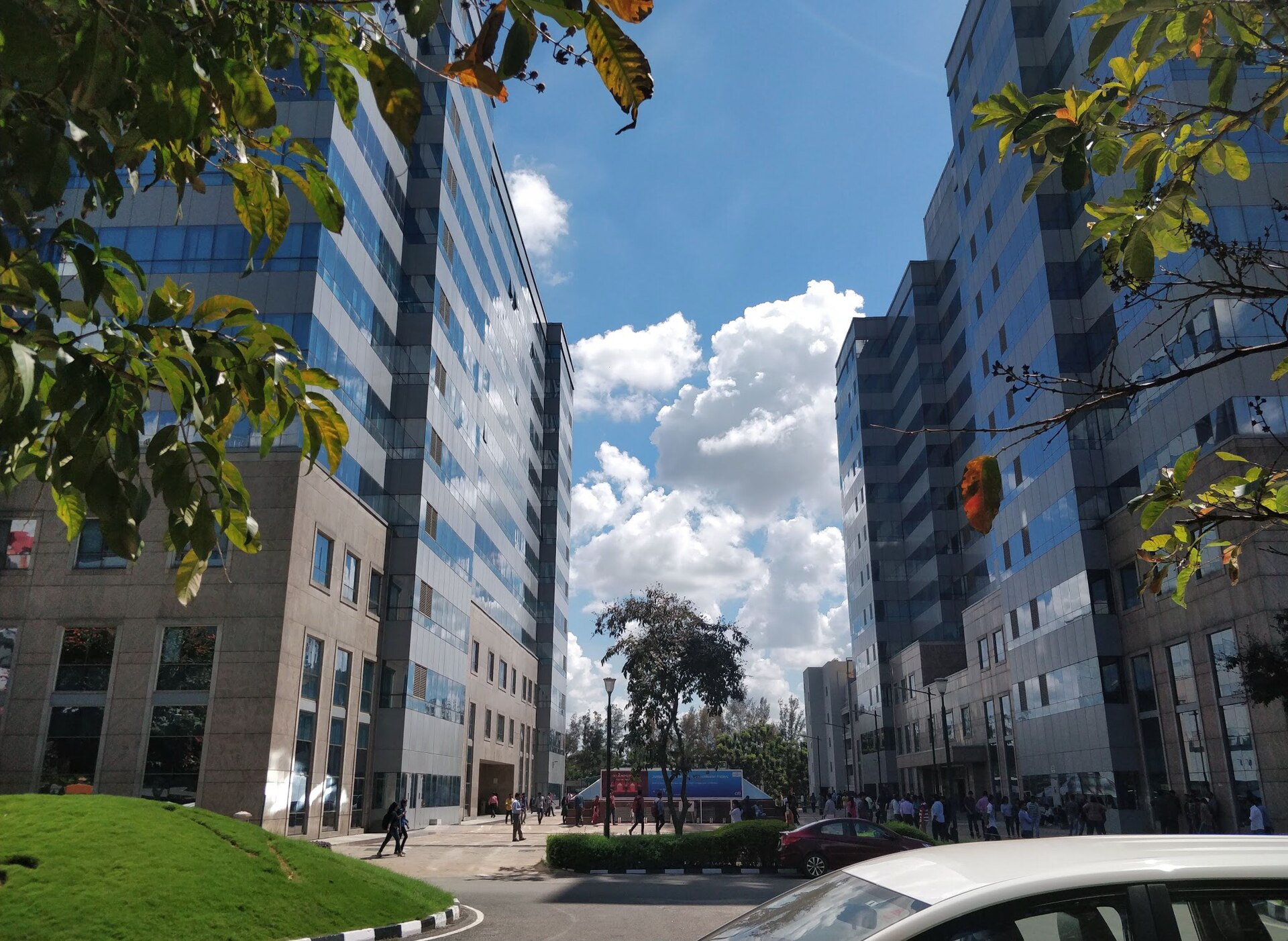
Photo: ITPL-Whitefield-Bangalore1.jpg by PageImp, CC BY-SA 4.0, via Wikimedia Commons
Interested in Prestige Rosewood Phase 3?
Ultra-luxury 2, 3 & 4 BHK residences directly opposite Varthur Lake. Pre-launch from ₹1.75 Cr. Possession December 2030.
Request Price & Floor Plans →